
Slate is one of those roofing materials that rewards a closer look. From the pavement, two roofs can appear almost identical. Up close, one may be 140-year-old Welsh slate with decades of life left in it, while the other is a fibre-cement imitation laid in the 1990s and now going chalky at the edges. Knowing which is which matters whether you are buying a house, budgeting for repairs or sanity-checking a roofer's quote. You do not need to climb a ladder to make a sensible assessment, but you do need to know what you are looking at.
The three families of slate
Almost every slate roof in the UK falls into one of three groups: natural, synthetic or reclaimed. Natural slate is quarried rock, split along its natural cleavage into thin sheets. Synthetic slate is manufactured in a mould from fibre cement, rubber, resin or a plastic composite, and is often sold as "slate-effect" or "reconstituted". Reclaimed slate is natural stone lifted from an old roof and re-laid, either as a like-for-like repair or across a whole property.
Each has a distinctive look, a different lifespan and a very different price tag, so the identification is worth getting right.
Natural slate: colour, grain and taper
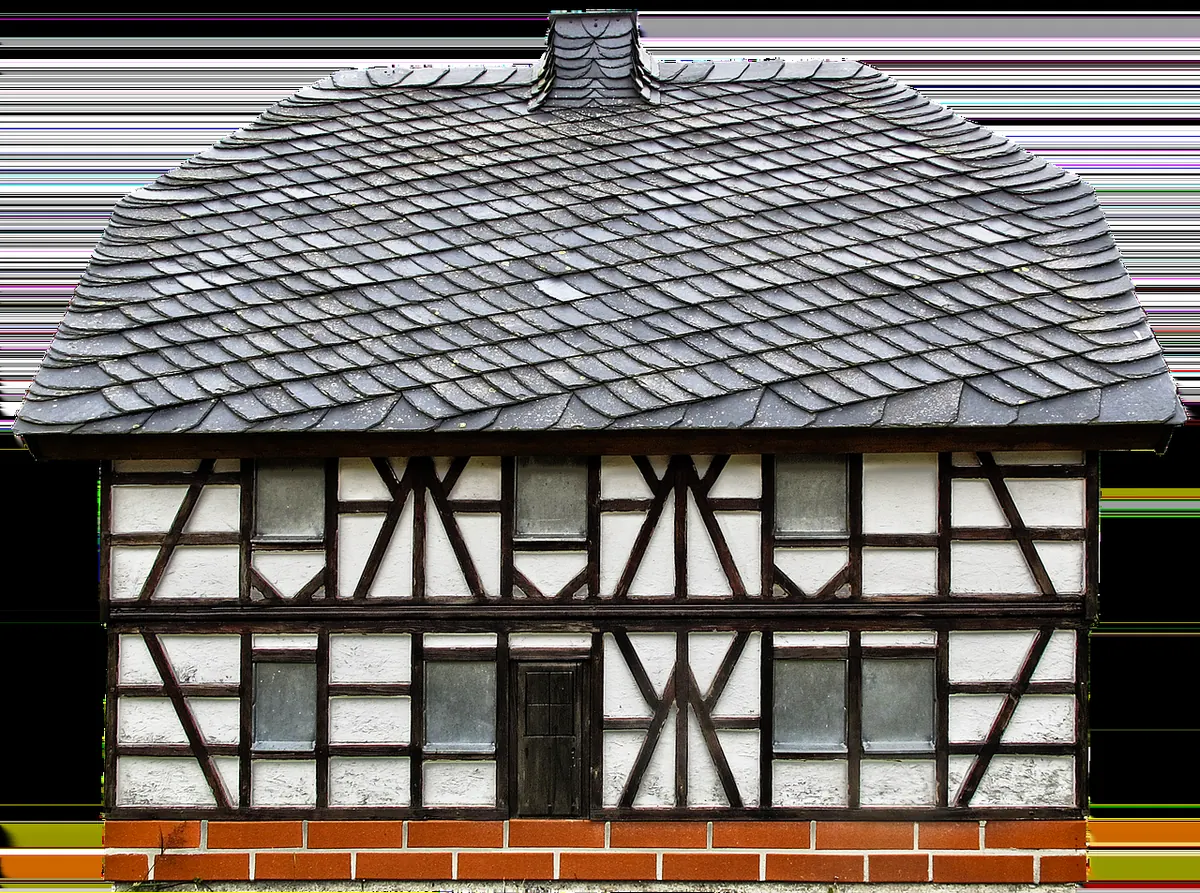
Natural slate started life as sedimentary rock, then was compressed by heat and pressure until it split cleanly. That history shows on the surface. Run your eye across a natural roof and you will see slight ripples and variations, a fine rather than glossy grain, and individual slates that differ in width and colour. The edges taper: the head of the slate, where the nails go, is thicker than the tail that shows.
Regional character is a useful clue. Welsh slate from the Penrhyn and Cwt-y-Bugail quarries tends to be a strong blue-grey, hard and famously long-lasting. Cumbrian and Westmorland slate is often green-grey or heather purple, with a rougher riven face. West Country slate from the Delabole area is darker and thicker, and older Cornish roofs frequently have very thick, heavy slates indeed. On top of that sit large quantities of imported natural slate from Spain, Brazil and China, which can be excellent or mediocre depending on the quarry and grade, and rarely announce themselves from the ground.
Two reliable tests if you can get close: natural slate sounds like stone when tapped with a fingernail, and its underside, seen through a loft hatch, is dull and slightly textured rather than smooth and uniform.
Synthetic slate: uniformity gives it away
Synthetic slates are made in moulds, and that is what betrays them. Every slate in a course is the same size, the same thickness and the same colour. The edges are crisply square rather than gently tapered. Look for repeated surface patterns, faint mould seams, or small marks on the face where the material was poured or pressed. Fibre-cement versions often develop a chalky bloom and chip at the corners as they age, and older examples can go brittle enough to crack underfoot.
Some modern composites imitate a riven texture convincingly from a distance. The reverse usually tells the truth: a flat, smooth underside, sometimes with a stamped brand name or a faint mesh pattern. If the roof was built or re-roofed in the last thirty years and every slate is identical, assume synthetic until proven otherwise.
Reclaimed slate: patina and old nail holes
Reclaimed slate is natural stone that has already lived a life. It usually looks grey and weathered, with lighter, worn edges and a certain softness that new slate lacks. Sizes are mixed, colours shift slightly course to course, and many slates carry old nail holes — sometimes two pairs, where the slate has been re-holed for a second fixing. Lichen and algae are common, though their absence proves little, since a roof can be cleaned.
The catch is that some "reclaimed" slate is imported stone that has been artificially aged, or a low-grade batch sold on. Genuine reclaimed Welsh slate is prized for repairs because it matches existing stock; reclaimed material of unknown origin is a gamble, because you cannot be sure how much life is left in it.
What the whole roof tells you
Individual slates matter, but the roof as a system often gives the answer faster:
- Course pattern. Old natural slate roofs frequently use diminishing courses, with large slates at the eaves and smaller ones towards the ridge, and random widths across each course. Modern roofs are usually uniform.
- Ridges and hips. Traditional mortar-bedded ridge tiles suggest an older roof; dry-fixed systems point to a recent one.
- Verges and eaves. Look for the thickness of the slate edge-on. Thick, uneven edges mean stone; thin, identical edges suggest a manufactured product.
- The loft. From inside, you can see the underside of the slates, the battens, the underlay and the nails. Rusty or corroded nails, torn underlay and daylight between slates all tell a story.
- Slipped or missing slates. Natural slate fails slowly and gracefully. Fibre cement tends to fail suddenly, with corners breaking away.
Getting a closer look safely
Binoculars and a phone camera with a good zoom will handle most of the work from the garden or pavement. A dormer window, a loft hatch or a flat-roofed extension can get you surprisingly close. What you should not do is walk on the roof. Slate is brittle, slippery when damp and unforgiving of a careless step, and even a "quick look" can turn into a cracked course and a hospital trip.
If you are buying a property and the roof is a significant part of your decision, pay for a proper roof survey rather than relying on your own inspection. A surveyor or experienced slater can date the covering, gauge how much life is left and give you a realistic figure for repairs — which is far more useful than a guess.
A quick checklist for viewings
- Check whether every slate is the same size and colour. If yes, it is probably synthetic or a modern uniform natural roof.
- Look for tapering edges and surface ripples, the hallmarks of natural stone.
- Scan for old nail holes and mixed sizes, which suggest reclaimed material.
- Note any chalking, chipping or cracking at the corners, common in ageing fibre cement.
- Ask when the roof was last worked on, and who did it. Paperwork settles most arguments.
- Get a professional opinion before committing to a purchase or a large repair.
None of this replaces eyes on the roof, but it will help you ask better questions — and spot the difference between a roof with another fifty years in it and one that is quietly asking for a scaffold.
Photo: anaterate / Pixabay